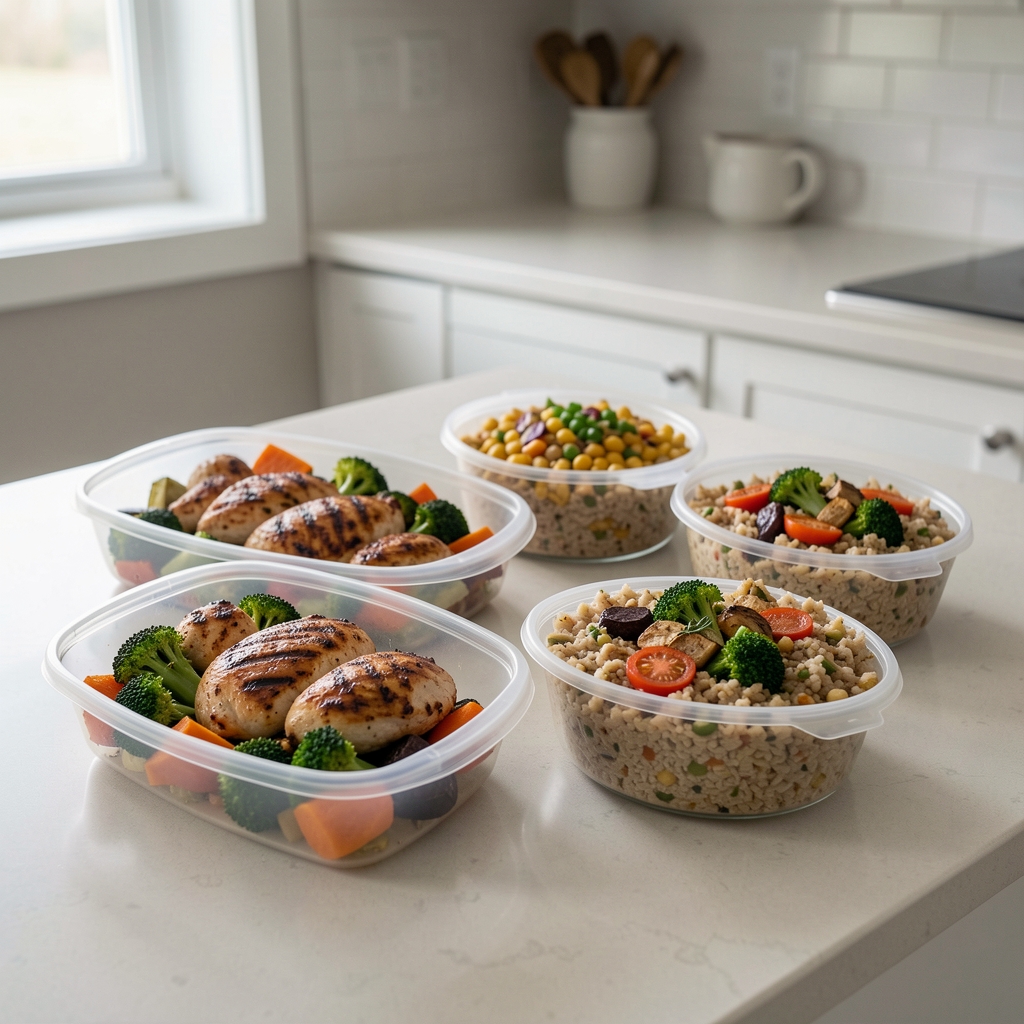
The kitchen on a Sunday afternoon carries a particular quality of focus. Containers aligned on the counter, a few cuts of protein resting in a warm pan, grains cooling in a colander by the window. Meal prep is not a regime so much as a quiet act of forward planning — one that shapes the rhythm of every subsequent meal in the week ahead.
"The strongest weeks are built in advance. Preparation is not discipline — it is simply care applied early."
The Logic of Batch Preparation
Batch preparation works because it removes the friction of daily decision-making around food. When protein sources are already cooked and portioned, the question shifts from "what should I eat" to "how should I assemble this." That shift is small but consequential. Decisions made under time pressure or fatigue tend toward convenience foods that offer little in terms of nutritional density.
The approach works best when anchored to a simple rotation: two protein sources, two grain or starch options, and a range of roasted or fresh vegetables. From these, four or five distinct meals can be assembled across the week without repetition feeling monotonous.
The proteins most suited to batch preparation are those that retain texture after refrigeration: whole grains of rice, lentils, or farro hold well for four to five days. Chicken breast, salmon portions, and hard-boiled eggs similarly remain reliable within that window. Ground meat — lamb or beef — is better prepared fresh or within two days.
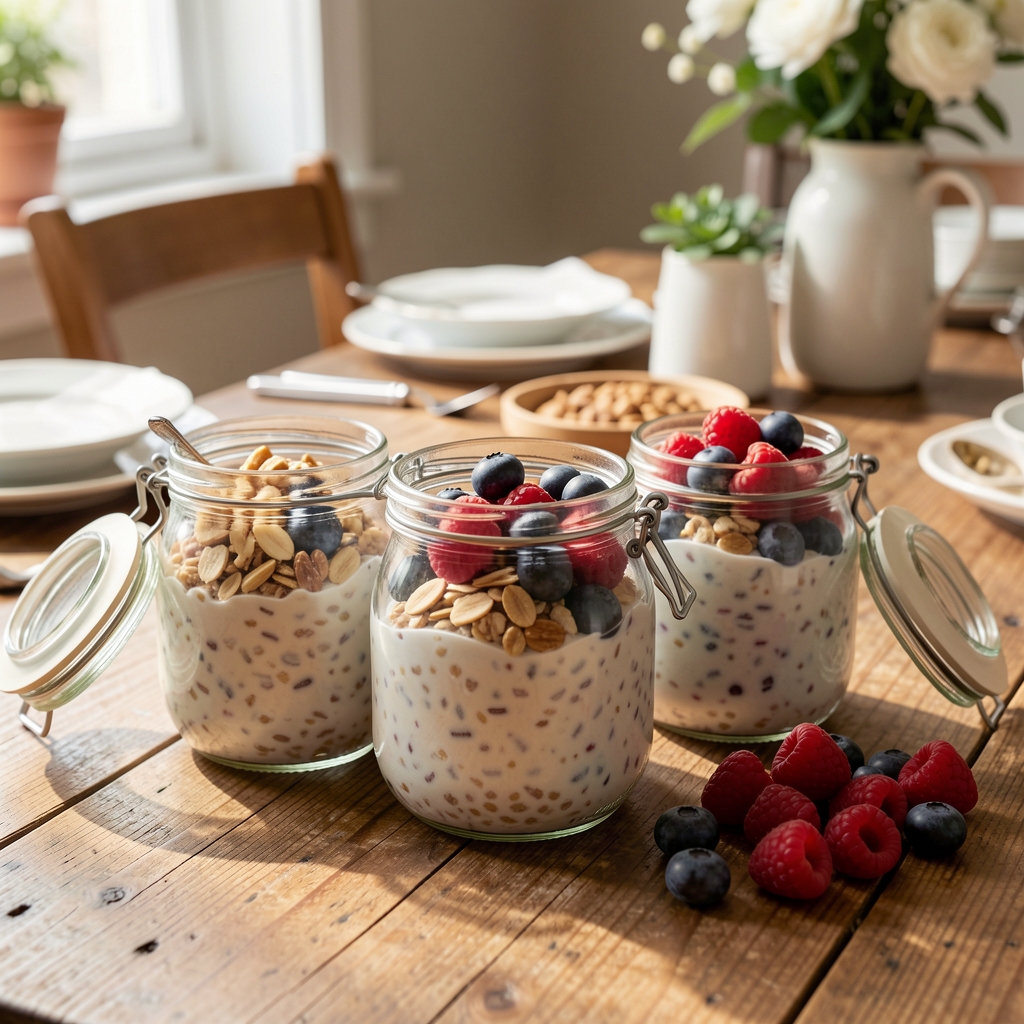
Breakfast preparation — a consistent first meal simplifies the rest of the day.
Protein Distribution Across the Day
Nutritional research increasingly points to the value of spreading protein intake across three to four meals rather than concentrating it in one or two. The body's ability to use amino acids for tissue maintenance is not unlimited at any single sitting — estimates from published research suggest that somewhere between 20 and 40 grams per meal represents an effective range for most active men, with the upper end better suited to those with higher lean mass.
Practically, this means structuring meals so that breakfast contributes meaningfully rather than functioning as a carbohydrate-only event. Eggs, Greek yogurt, cottage cheese, or smoked fish each provide a useful base. The midday and evening meals carry the heavier portions, while a fourth, smaller intake — often a pre-sleep combination such as casein-rich dairy — rounds out the distribution.
For men engaged in regular strength training, total daily protein in the range of 1.6 to 2.2 grams per kilogram of bodyweight is consistent with peer-reviewed guidance on supporting body composition. This figure is achievable through whole foods without recourse to supplementation, provided meals are structured with some intentionality.
- 01 Batch two protein sources and two grain bases each Sunday — this creates a combinatorial range without daily cooking.
- 02 Distribute protein across three to four meals rather than concentrating it at dinner.
- 03 Whole foods — eggs, legumes, lean meats, dairy — meet most protein targets without supplementation.
- 04 Refrigeration window for most prepared foods is four to five days; plan prep quantities accordingly.
Building a Lean, Balanced Plate
The balanced plate concept — a rough division of space between protein, complex carbohydrates, and vegetables — functions as a useful mental shortcut rather than a rigid formula. Half the plate given to non-starchy vegetables provides volume, micronutrient density, and fibre without substantially increasing total energy intake. A quarter to the protein source, and the remaining quarter to a grain or starchy vegetable, covers the remaining macronutrient bases.
What the plate model underserves is fat. Dietary fat — particularly from sources such as olive oil, avocado, oily fish, and nuts — supports fat-soluble nutrient absorption and contributes to satiety. A tablespoon of olive oil in cooking, or a small handful of walnuts alongside a meal, addresses this gap without materially disrupting the plate's structure.
For men aiming to adjust body composition, the most reliable single change is rarely adding to a plate — it is replacing ultra-processed items within the existing eating pattern with whole-food equivalents. The effect compounds quietly over weeks.
Hydration as a Nutritional Variable
Hydration is often separated from nutrition in practice, yet its effects on physical performance and cognitive function are well-documented. Mild dehydration — a reduction in body water of as little as 1 to 2 percent — has been associated in published research with reductions in physical output and concentration.
For active men, the practical guidance from sports nutrition research centres on consuming enough fluid to offset losses through sweat and respiration. A rough baseline of 35 millilitres per kilogram of bodyweight per day — adjusted upward for heat and exercise intensity — provides a working figure. The colour of urine remains a simple, practical indicator: pale straw is adequate hydration; dark amber is not.
Coffee and tea contribute meaningfully to daily fluid intake in spite of their mild diuretic properties. The net hydration from moderate caffeine consumption is positive — a nuance lost in older popular guidance that recommended approaching caffeinated drinks as exclusively dehydrating.
Practical Notes on Shopping and Storage
A consistent weekly shop anchored to a short list of staples reduces both cost and cognitive effort. The staples most worth holding in rotation: eggs, a lean protein (chicken, tuna, or a legume), a grain (rice, oats, or farro), a fat source (olive oil, nut butter), and a vegetable range covering both cooked and raw options.
Storage choices affect the quality of prepared food over time. Glass containers with airtight seals outperform plastic alternatives for refrigeration of prepared meals — they do not absorb flavours, clean more reliably, and allow easy inspection without opening. A half-hour investment in storage infrastructure at the start pays dividends across the week.
Freezing is underused. Cooked grains, portioned proteins, and soups freeze well for up to three months and can serve as emergency reserves during weeks when regular prep is not possible. A consistent habit of freezing one or two portions during each prep session builds a useful buffer over time.